




loading count
loading pagination
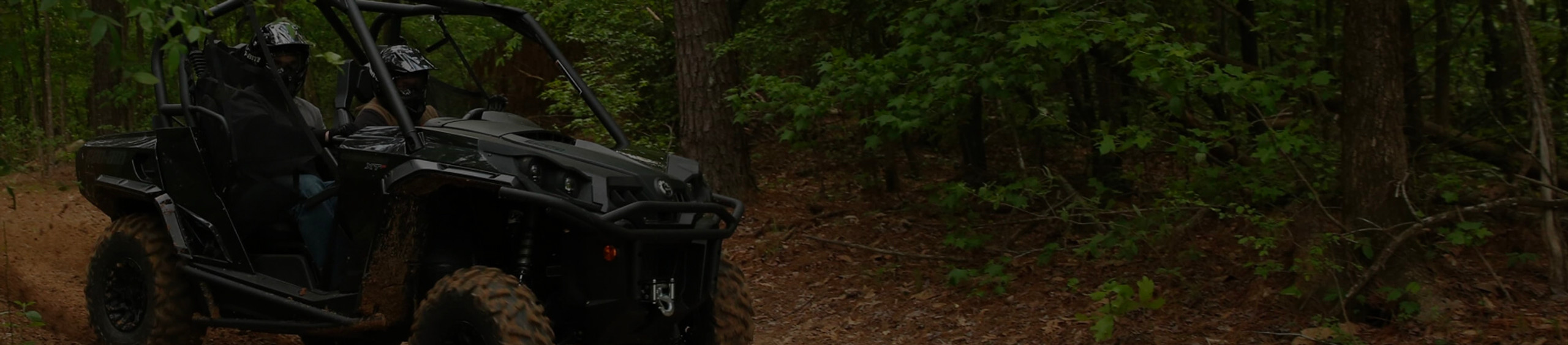
The machine is capable in weather that you are not. That is the whole problem a cab enclosure solves. Forty degrees and raining on a Honda Pioneer with an open cab is a genuinely miserable hour, and it is why a lot of side by sides sit in the shed from November to April doing nothing. Enclose the cab and the machine goes from a fair-weather tool to the one you reach for when the weather is bad — feeding stock in sleet, running a trapline, plowing at dawn, hauling firewood in a downpour. We carry 968 cab enclosure products across every make we cover — Polaris, Can-Am, Honda, Kawasaki, Yamaha, CFMoto, Arctic Cat, John Deere and Kubota — from a $98 soft door panel to a $5,475 full hard cab system with automotive glass. We are in Wisconsin. We enclose our own machines and we do it in stages, like everyone else.
Here is the part that surprises most first-time buyers, and it is good news: you almost certainly do not need to buy a whole cab. About half of what we sell in this category is partial — side enclosures, upper door panels, sides-and-rear combinations — because most machines already have a roof and a windshield, and what is actually missing is the sides. A $350 set of side enclosures on a machine that already has a roof gets you most of the way to a sealed cab for a tenth of what a full hard system costs. Work out what your machine already has before you shop, then buy the gap. Use the vehicle selector at the top of this page to narrow all 968 products to your machine, or call (414) 219-0509, text 920-644-5280, or hit the live chat and a real UTV person will tell you which pieces you are actually missing.
Almost every guide to this category asks the first question and skips the second. The second one is the one that decides what you spend.
| Complete — the whole cab in one purchase | Partial — fills the gaps in what you have | |
|---|---|---|
| Hard — rigid panels, glass or polycarbonate | 116 products, $1,000 to $5,475. Automotive-grade doors, sealed frames, quiet cabs. The answer for a machine that works every day in bad weather | 24 products. Hard doors or hard rear panels added to an existing roof and windshield |
| Soft — fabric, vinyl and zippered panels over a frame | 247 products, $400 to $1,400. Full weather protection that unzips and stows in summer | 473 products, $98 to $800. Side enclosures, upper door panels, sides-and-rear kits. The biggest segment we sell, by a wide margin |
Hard cabs are the highest protection available and they change the machine. Rigid panels, real doors with automotive-style latches, glass or hard-coated polycarbonate, and a seal good enough that a heater actually works and the cab goes quiet. They also add 100 to 200 pounds high on the machine, which raises the center of gravity slightly, and they cost what they cost — $4,000 and up for a premium system. This is what you buy when the machine is a work vehicle first.
Soft cabs are lighter, cheaper and more flexible. Fabric and vinyl over a frame, usually with zippered or roll-up sections so you can vent without stripping the whole thing off. A full soft enclosure runs 15 to 30 pounds and has essentially no effect on how the machine drives. The trade is durability and clarity: vinyl windows cloud with UV over a few seasons and fabric will not take what a steel panel takes.
Complete versus partial is the decision that saves money. Complete means the whole enclosure arrives as one engineered system — sides, rear, and often the windshield and roof, designed to seal to each other. Partial means the piece you are missing. On most machines that piece is the sides, because roofs and windshields are the two things people buy first and side openings are what is left. Side enclosures at $315 to $530 are the single best-selling thing in this category, and that is riders solving the real problem rather than buying a system.
Worth knowing: several kits sold as "full cab enclosures" are built to use the hard roof and front windshield you already have, closing the sides and rear around them. Those give you a complete cab at soft-cab prices, and they are the best value on this page if your machine already has the top and the front covered.
An enclosure that stops 90% of the wind and rain is not 90% as good as one that stops all of it — it is a cab with a draft in it, and you will feel that draft for the entire ride. Sealing is not a feature of a good enclosure, it is the product.
Where enclosures leak. The seam between the door and the roof line. The gap under the dash where the enclosure meets the body. The rear corners behind the seats, which is where most soft kits give up. Around the windshield, especially where an aftermarket windshield meets a factory roof or the reverse. Look for full-perimeter sealing, storm flaps behind zippers, and mounting hardware that pulls the panel tight rather than just holding it in place.
How it attaches matters as much as how it seals. Soft enclosures generally mount one of two ways: self-adhesive snaps and hook-and-loop, which require no drilling, or pop-rivet snaps, which do. The no-drill option is reversible and faster, but adhesive will not hold as permanently and it can lift decals if applied over them. Riveted snaps are permanent and they do not let go. Most manufacturers let you choose at checkout, and it is worth thinking about for ten seconds rather than defaulting.
Windows are the part you will regret or thank yourself for. Cheap vinyl clouds and yellows within a season or two, and once it does you are looking through it every ride until you replace it. Hard-coated polycarbonate or safety glass stays clear for the life of the machine. Where a kit uses vinyl, check whether the manufacturer sells replacement window sets — several do, and it turns a five-year enclosure into a ten-year one for a fraction of a new kit.
Visibility matters more than people plan for. Once you enclose the cab you lose the over-the-shoulder look you have been relying on. Check that rear and side windows are big enough and positioned where you actually look, and budget for mirrors if the machine does not have them.
Summer. Any enclosure you cannot vent becomes an oven. Look for roll-up or unzip sections, vented panels, or a kit designed to come off in pieces rather than all at once. The best soft designs unzip from the bottom so a door still opens normally, and from the top so you can reach out for a gate or a mailbox without opening anything. The riders who are happiest with soft enclosures are the ones who run them half-open from June to September.
Winter. Hard cabs with sloped roofs shed snow on their own. Soft tops need brushing off, because wet snow sitting on fabric is a real load that stresses seams and can pool. Some soft kits include support bows specifically to prevent that, and on a machine that lives outside in snow country, those are worth paying for.
Zippers and storage. Frozen zippers tear. Warm them before forcing them. When the enclosure comes off, fold it with the windows clean and separated — dirt trapped between folded panels is the fastest way to scratch a vinyl window, and folding on a gritty tailgate has ruined more enclosures than weather has. Most quality kits include a storage bag; use it.
Realistic lifespan. A quality soft enclosure gives you three to five years before the windows cloud or the fabric starts to go. Budget kits often give one or two. UV is the main killer, so store it out of direct sun. Hard cabs, kept sealed and maintained, effectively outlast the machine.
Under $400 — partial soft, and the best value in the category. Kemimoto's RZR XP 1000 soft door with upper windows is $97.99. Greene Mountain's side enclosures run $314.00 for the YXZ 1000R, $349.50 for the Pioneer 1000 and Teryx, $349.95 for the Viking and Commander, and $379.95 for the Pioneer 700. Three Star's Gator vinyl windshield and top combo is $345.95. If your machine already has a roof, this tier gets you a usable cab.
The volume tier, $400 to $900. Where full soft enclosures and better partials live. Greene Mountain's Viking full cab enclosure is $449.00, their RZR full cab is $499.99 and the Mule 4010 transport cab is $699.99. SideXSide Enclosures runs $400 to $865 across the Wolverine X2, Teryx 4, Mule Pro FXT, Pioneer and Wolverine X4. SuperATV's Primal soft cab upper doors run $394.95 to $1,055.90. Three Star's RTV full cab enclosure for a hard windshield is $806.95 to $901.95.
Hard cab systems, $1,200 to $5,475. Three Star's Gator XUV 550/560/590 full cab with vinyl windshield is $1,235.88 to $1,371.81. At the top, DFK Cab's Defender Deluxe hard cab system is $4,525.00 and their Mule Pro-FX/DX full hard cab runs $4,225.00 to $5,475.00. These are automotive-quality systems and they are priced accordingly.
Roughly 71% of this category sits above $450, which reflects how many complete systems are in it. But 58 products sit under $200, and the partial-soft tier is where most of our volume actually happens.
Every order is covered by our 90-day return policy and our best price guarantee. The most common manufacturer warranty in this category runs 3 to 6 months, though several enclosure makers cover a full year on materials and workmanship — and Side by Side Source offers extended 1- and 2-year warranties on all products if that is something you are interested in, which you can add right at checkout. On the hard cab systems, Affirm at checkout lets you spread it, and note that full hard cabs ship freight with a shipping charge shown on the listing.
Behind those three, SideXSide Enclosures builds the sides-only and upper-door kits across most makes, SuperATV makes the Primal soft cab line, and Octane Ridge, Falcon Ridge, Kemimoto, Dirt Warrior Accessories and Moose fill in the rest. Browse them all on the UTV brands page.
Not seeing your machine? These six are the volume sellers, not the catalog. Honda Pioneer 500, 520, 700, 1000 and 1000-5, Polaris Ranger and General, Yamaha Viking and Wolverine, Kubota RTV and Sidekick, John Deere Gator and Arctic Cat Prowler all have dedicated enclosures — filter by your year, make and model and the page narrows to what fits.
Most people build a cab in stages, and the order matters more than the total.
A roof comes first, because nothing else works without it. Then a hard front windshield — a folding or half shield leaves a gap that undoes the rest. Then the sides, which is where doors or the partial enclosures on this page come in, and this is usually the biggest single improvement per dollar. Then a rear panel or rear windshield, because a moving machine drags cold air and dust forward through the open back even when the front is sealed.
Only once all four are closed is a UTV heater worth installing. A cab heater in a leaky cab is heating the outdoors, and it is the most common ordering mistake we see. Get the enclosure right and a $427 heater will roast you out. Get it wrong and no heater on this site will make you comfortable.
Two more worth knowing. Mirrors matter once panels block your over-the-shoulder view. And if you plow, the enclosure is not optional — plowing is slow, stationary work in the worst weather of the year, and it is the most common reason people in the north enclose a machine at all.
Do I need a full enclosure, or just the sides? Usually just the sides, and this is the question worth asking before you spend anything. Most machines already have a roof and a windshield, which means the openings are on the sides and the rear. A set of side enclosures at $315 to $530 on a machine that already has a roof gets you a genuinely usable cab for a fraction of a full system. Several kits sold as full enclosures are also designed to use your existing roof and windshield, which is the same idea at a slightly larger scale. Buy the gap, not the whole thing. Tell us what is already bolted to your machine and we will tell you what is actually missing.
Do I have to drill holes in my machine? Not usually. Most soft enclosures give you a choice at checkout between self-adhesive snaps with hook-and-loop, which need no drilling, and pop-rivet snaps, which do. No-drill is reversible and faster to install, but adhesive is less permanent and it can pull at decals if applied over them, so plan where it lands. Riveted snaps are permanent and they will not let go. Hard cabs generally bolt to existing frame and roof mounting points.
Can I add a heater or air conditioning to an enclosed cab? Yes, and a sealed enclosure is what makes both worth doing. Most cab heaters produce 3,000 to 6,000 BTU, which will keep a well-sealed cab comfortable well below freezing — but in a leaky cab it does almost nothing. Air conditioning needs the same seal plus real electrical capacity, often an upgraded alternator and sometimes a second battery. Some hard cab systems come pre-wired or pre-cut for climate control, so check the listing if that is the plan.
How long does a soft enclosure last? Three to five years for a quality kit before the vinyl windows cloud or the fabric begins to fail. Budget kits often give one or two seasons. UV is the main killer, so store it out of direct sun when it is off the machine. Fold it clean, because grit trapped between panels scratches windows permanently, and never force a frozen zipper. Several manufacturers sell replacement window sets, which is a cheap way to get several more years out of a kit whose fabric is still good.
Will an enclosure hurt handling or ground clearance? Ground clearance, no — enclosures mount to the existing frame and roof structure. Handling, a little, and only on hard cabs. A hard system adds 100 to 200 pounds fairly high on the machine, which raises the center of gravity enough to notice in aggressive cornering but not in work or trail riding. Soft enclosures add 15 to 30 pounds and change nothing. The dimension worth checking is width, since some door designs sit slightly proud of the stock profile, which matters on tight trails.
Hard or soft — which should I buy? Hard if the machine works every day in bad weather, if you want it quiet, or if you are running a heater and want the seal to hold. Soft if you want weather protection part of the year and open air the rest, if weight matters, or if the budget is the deciding factor. There is no wrong answer, only a wrong match — a hard cab on a machine that mostly rides in summer is money spent on weight you did not want.
Are aftermarket enclosures as good as OEM cab systems? Most machines have no OEM enclosure at all, and where one exists it is usually a single option at dealer pricing. This page carries 968 products across a dozen brands, hard and soft, complete and partial, from a $98 soft door to a $5,475 automotive-grade hard cab — including partial kits that let you spend $350 instead of $4,000 because you only need the sides, and several custom-sewn in the USA. That range is the argument. It is not that the aftermarket is cheaper, it is that the right-sized answer exists.
Written and reviewed by the Side By Side Source fitment team — Wisconsin riders who run enclosed machines through real winters. See what UTV owners say about us on our customer reviews page. Spot an error, or have a suggestion that would make this page more helpful? Email marketing@gearup2go.com — we read every note.
Last updated: August 2026