




loading count
loading pagination
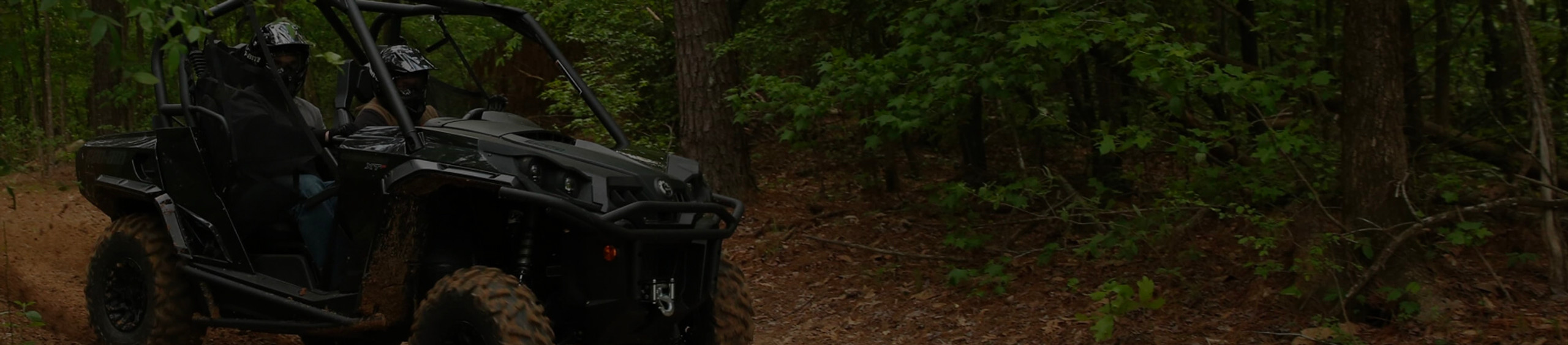
A branch you did not see coming catches you across the shin at 25 mph. A rooster tail of gravel comes off the front tire and into the footwell. It is 34 degrees and raining sideways on the ride back to the barn, and the machine you are in has an open hole where a door should be. Most side by sides leave the dealer with a nerf bar and nothing else, which is why doors are the first thing most owners buy and the upgrade they notice every single ride. We carry 1,067 door products across every make we cover — Polaris, Can-Am, Honda, Kawasaki, Yamaha, CFMoto, Arctic Cat, John Deere and Kubota — in aluminum, steel, HDPE, polycarbonate and ballistic fabric, from a $39 mesh net to a $2,400 hard-door system. We are in Wisconsin, which means we have opinions about what a cab needs to keep out in February.
Doors are model and generation specific, and the fit is tighter than most categories. A 2018 Ranger XP 1000 door will not bolt to a 2016. Crew and MAX cabs take different kits than two-seat cabs, and seat count changes the part number, not just the quantity. Before you order, check two things: your exact year and model, and what is already on the machine, because a full door built to seal against a factory roof will leave a gap under an aftermarket one. Use the vehicle selector at the top of this page to narrow all 1,067 products to your machine, or skip it entirely — call (414) 219-0509, text 920-644-5280, or hit the live chat and a real UTV person will match the doors to your machine and your roof before you spend a dollar.
Most door shopping goes wrong because people treat "half doors," "upper doors" and "soft doors" as one list of options. They are three separate decisions, and you answer all three on every purchase.
Coverage is how much of the opening gets closed. Position is which part of the opening a given panel covers. Material is what it is made of. A framed soft upper door is all three at once: upper position, soft material, and it converts a half-door machine to full coverage.
| Decision | Your options | What it means for your utv cab |
|---|---|---|
| Coverage | Full doors (246 kits) or half doors (434 kits) | Full runs floor to roof line and is what you need for a heater or winter work. Half stops around elbow height, costs less, and lets air through |
| Position | Lower doors (377) or upper doors (387) | Lowers block mud, rock and brush. Uppers are the panel that closes the gap between a half door and the roof, and can usually be added later |
| Material | Hard doors (301) or soft doors (351) | Hard means aluminum, steel, HDPE or polycarbonate — rigid, latching, impact-resistant. Soft means ballistic fabric or vinyl over a frame, lighter and cheaper, off in minutes |
| Extras | Door accessories (220) | Nets, bags, struts, latches and inserts — the parts that make doors work better or turn a bare frame into a door |
The most useful thing in that table is the upper-door count. There are 387 upper door products on this page, and that exists because most people build to full coverage in two purchases, not one. Buy lowers or half doors now for mud and brush, add uppers before winter, run lowers only in July when you want the air. That is the cheapest correct path through this category and almost nobody explains it, because the industry would rather sell you a full door twice.
The one thing to check before betting on that path: uppers are matched to a specific lower door system, not universal. Fortress uppers attach to Fortress half doors. SuperATV uppers pair with SuperATV lowers. Buy the lowers with the uppers in mind and the upgrade is a 20-minute job. Buy them blind and you may be buying the whole system again.
Hard is not one material, and the differences matter more than the word suggests.
Aluminum is the volume answer on sport and utility machines. Rigid, corrosion-proof, and light enough that a full set does not change how the machine drives. Moto Armor runs 1/8-inch aluminum skin, the thickest in the category. Most aluminum doors use a formed multi-bend skin over a tubular frame, which is what gives them the strength without the mass.
Steel is the heavy-duty answer, and it is genuinely heavy. Fortress builds 14-gauge steel doors in Texas with e-coat under powder coat, dual latching handles and rubber edge trim. Steel takes a hit that would dent aluminum and it seals like a truck door. The trade is weight and freight cost — steel door systems ship on a pallet, not in a box.
HDPE and polycarbonate split the difference. HDPE is impact-tough plastic that flexes instead of denting, common on half doors. Hard-coated polycarbonate is what you want in the window itself, usually 1/4-inch, scratch-resistant and rated far stronger than glass.
Soft doors are ballistic fabric or heavy vinyl over a frame, usually with zippered or roll-up windows. They cost a fraction of hard doors, weigh almost nothing, and come off in minutes. Three Star Industries builds theirs in heavy-duty material with sewn-in reinforcement. The honest limits: fabric will not stop what aluminum stops, and clear vinyl clouds after a few seasons of UV. For a hunting rig, a machine stored outside, or anyone who wants doors in November and open air in June, they are the right answer and not a compromise.
On weight: a full set of hard doors adds roughly 50 to 100 pounds. On a utility machine you will not notice. On a light sport machine you might, and steel is where you would notice it most.
Fitment is the whole game in this category, and the tells are specific.
Latches. An automotive-style slam latch is the difference between a door and a panel you hold shut. Two-stage latches with a locking mechanism are what you want on anything you leave parked. Watch the latch position too — a badly placed latch puts a knuckle of steel exactly where your knee goes, which is the single most common complaint about aftermarket doors and the thing good brands specifically engineer around.
Hinges and mounting points. Two mounting points minimum on a hard door. Oil-sealed or o-ring pipe hinges on the heavy stuff. Lift-off pin designs let you pull doors without tools for cleaning or for summer.
Seals. Rubber edge trim is what stops the rattle and keeps dust out. A door without edge trim will buzz on washboard and let fine dust in everywhere. This is the cheapest thing a manufacturer can skip and the first thing you notice.
Limiter straps. A strap that stops the door from over-swinging protects the hinges, the bodywork and the door itself. Cheap on a good door, absent on a bad one.
Struts. Gas struts hold a door open on a slope so it does not swing back into you while your hands are full. Standard on premium kits, available separately for the rest.
Window function. Fixed, sliding, vent or removable. A full door with no vent is an oven in August. Sliding windows are the practical answer on a machine that works year-round, and they are also what lets you talk to somebody without opening the door.
Doors span a wider price range than almost anything else we sell, and the tiers are genuinely different products rather than the same product at different quality levels.
Under $200 — nets, inserts and accessories. A Kemimoto mesh shield door net is $38.99. Pro Armor slam latches are $54.95. Aces Racing door bags are $79.99. Three Star's ABS lower door inserts run $112.95 to $113.75 and fill in an open lower on machines like the Wildcat. This tier is not "cheap doors," it is the parts that upgrade what you already have. Two hundred and seven products sit here.
The sweet spot, $300 to $800. Where most riders land. Three Star's soft upper doors start at $327.74, Pioneer 500 soft doors are $404.99, SuperATV's RZR aluminum doors are $474.95, Blingstar's Ranger doors are $654.95, SuperATV's Wolverine aluminum doors are $720.95, and Tusk's framed soft uppers for the General 4 are $731.49. This is a complete door set, in real materials, with real latches.
Premium, $1,100 to $2,430. Spike's Ranger XP 1000 aluminum kit is $1,139.95. Moto Armor's four-seat RZR aluminum kit is $1,644.00. Rival's Defender MAX set of four is $1,778.95. SuperATV's Ranger cab doors reach $2,326.95 and Rough Country's Defender hard side doors top out at $2,429.95. At this tier you are buying full enclosure, sliding windows, locking latches and freight-shipped weight.
Roughly 56% of this category sits above $450, but unlike most of our categories there is a real, deep budget tier here — the sub-$200 band alone has over 200 products.
Every order is covered by our 90-day return policy and our best price guarantee. The most common manufacturer warranty in this category runs 3 to 6 months, but Side by Side Source offers extended 1- and 2-year warranties on all products if that is something you are interested in — you can add the extended warranty right at checkout. On the bigger door systems, Affirm at checkout lets you spread it.
Behind those three: Kemimoto brings 136 products and the value end of the category, Falcon Ridge and Seizmik build framed door kits, Greene Mountain makes side enclosures, DragonFire and Dirt Specialties cover the sport machines, and Fortress builds the 14-gauge Texas steel. Browse them all on the UTV brands page.
Not seeing your machine? These seven are the volume sellers, not the catalog. Can-Am Defender and Maverick, Honda Pioneer and Talon, Kawasaki Teryx and KRX, Yamaha Viking and Wolverine, CFMoto UForce and ZForce, Kubota Sidekick and RTV, and Arctic Cat Prowler and Wildcat all have dedicated door kits — filter by your year, make and model and the page narrows to what actually bolts on.
Two hundred and twenty products on this page are not doors. They are what makes doors work, and several of them outsell actual door kits.
Door nets and mesh shields are the cheapest way to close an opening. Kemimoto's mesh shield door net is $38.99 and PRP's KRX mesh window nets are $175.99. On a sport machine, nets do the job doors do without the weight, and they are required at some riding areas.
Door bags turn dead space into storage. Aces Racing's RZR 1000 and Turbo door bags at $79.99 are the third best-selling product in this entire category, which tells you how many people already have doors and want more out of them.
Door struts hold a door open on a hill instead of letting it swing into you. AJK Offroad's UForce U10 struts run $160.03 to $322.06, and Bent Metal Offroad's EZ Hold struts for the Maverick X3 are $125.00.
Slam latches upgrade a door that closes badly. Pro Armor's RZR 570, 800 and XP 900 slam latch and front door set is $54.95.
ABS lower door inserts fill the open lower on machines that came with a bare frame. Three Star's Wildcat Trail inserts are $112.95 and the Wildcat X 1000 version is $113.75. Both are top-ten sellers here, which says a lot about how many Wildcats are running around with open doors.
Browse all 220 by selecting Door Accessories in the filter at the top of this page.
Doors close the sides. What you do with the rest decides whether the machine is usable in bad weather.
A cab enclosure is doors plus the roof, windshield and rear panel working as one sealed system, and it is what you actually want if the plan is winter work. Add a UTV heater once the cab is sealed — a heater in an open cab is warming the outdoors, and this is the single most common ordering mistake we see. A hard windshield and a roof close the front and top, windshield wipers handle wet snow, and mirrors matter more than you would think once doors block the over-the-shoulder look you have been relying on.
If you plow, do the doors before the snow plow, not after. Plowing is the coldest slowest thing you will ever do on a side by side.
Can I add upper doors to the half doors I already have? Usually, if you match the system. Uppers are built to attach to a specific brand's lower or half doors — Fortress uppers to Fortress halves, SuperATV to SuperATV — rather than universally. If you already have half doors, tell us the brand and model and we will confirm whether an upper kit exists for them before you order. If you are buying lowers now and thinking about uppers later, buy a brand that makes both.
What if I already have a cab enclosure or a windshield? Plenty of door kits are designed to work alongside them, but the seal is where it goes wrong. A full door built to meet a factory roof can leave a gap under an aftermarket roof, and a door built for a hard windshield may not seal against a folding one. Text us your year, model, and what is currently on the machine, and we will confirm the combination fits before it ships.
Can I run just a driver's side door? Yes, and plenty of solo riders do — one door for debris protection on the side you actually get hit from, and no cost for a passenger door nobody uses. Some kits are sold as singles and some only as pairs, so check the listing. A pair balances the machine slightly better and looks finished, but a single door is a legitimate purchase, not a compromise.
How much do doors weigh, and will I notice? A full set of hard doors adds roughly 50 to 100 pounds, with steel at the top of that range and aluminum at the bottom. On a utility machine like a Ranger, Defender or Mule you will not notice it. On a lighter sport machine it slightly raises the center of gravity. Soft doors add almost nothing, usually under 20 pounds for a set.
How long does installation take? Bolt-on aluminum or steel doors run one to two hours per pair with basic hand tools, and most need no drilling. Soft doors take about the same the first time because you are setting up the frame and snaps, then come off and back on in minutes for the rest of their life. If seasonal removal matters to you, look for lift-off pins or quick-release hardware rather than bolts.
Are aftermarket doors as good as OEM doors? OEM sells you one door in one material at one price, and on a lot of machines OEM does not sell doors at all past the first few model years. This page carries 1,067 door products across dozens of brands, in aluminum, 14-gauge steel, HDPE, polycarbonate and ballistic fabric, priced from $38.99 to $2,429.95 — including full kits for machines the dealer stopped supporting. The aftermarket argument in this category is not that it is cheaper. It is that the choice exists at all.
Written and reviewed by the Side By Side Source fitment team — riders and product specialists who match doors to machines every day. See what UTV owners say about us on our customer reviews page. Spot an error, or have a suggestion that would make this page more helpful? Email marketing@gearup2go.com — we read every note.
Last updated: August 2026