

loading count
loading pagination
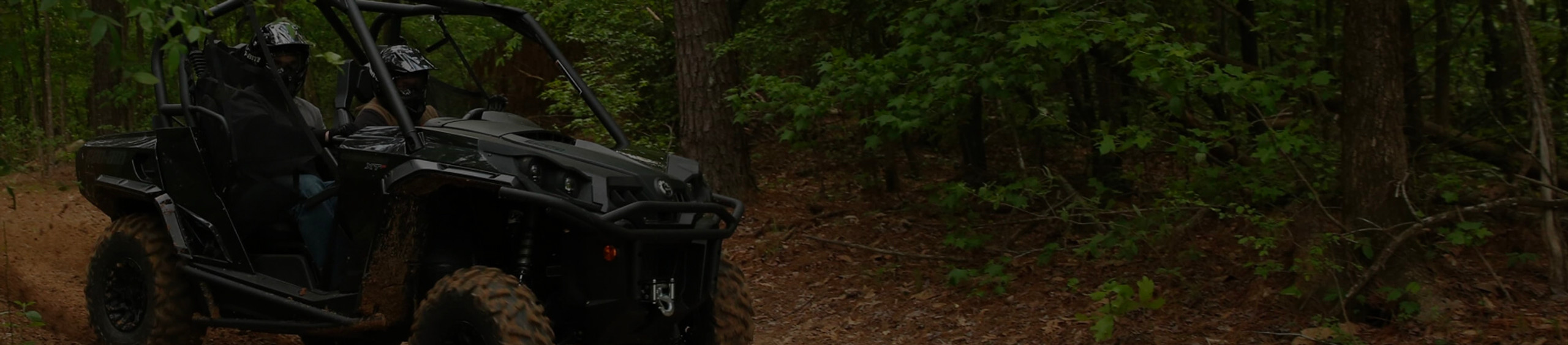
Evolution Powersports — EVP, and you will also see it written EVO Powersports — has been building horsepower for side by sides since 2009. They are a tuning company first and everything else second, and that order matters, because it explains why an EVP exhaust and an EVP clutch kit are engineered to work with an EVP tune rather than sold as standalone parts that happen to share a logo.
The company is run by Jim and Todd Zuccone. Jim brings 30-plus years of hands-on snowmobile and off-road development — the clutching, suspension and power-delivery work that turns a dyno number into something that actually drives well. Todd came from the automotive side, where he founded Evolution MotorSports in 1997 and earned multiple world speed records on ECU tuning. That automotive tuning pedigree is the unusual part of EVP's background and it shows up in how they approach the ECU.
This is the part worth understanding, because "ECU tune" means very different things depending on who is selling it.
Full ECU access, not a limited map editor. EVP uses the same ECU calibration tools the OEM engineers use, which gives them access to the entire ECU rather than the small set of fuel and timing tables that consumer-grade tuning suites expose. By their own account, most competitors are working with roughly 5% of what is inside the machine's computer. That difference is why an EVP flash can address things like launch control, rev limiters and safety strategies rather than just adding fuel and boost.
Tunes are built for your specific parts. An EVP flash is matched to what is actually bolted to the machine — intake, exhaust, turbo, fuel — rather than being one generic file for the model. If you change hardware, the tune should change with it.
A real dyno, and honest numbers. EVP runs a climate-controlled dyno facility and publishes what they call conservative, realistic horsepower figures rather than inflating gains against a lowballed baseline. That is genuinely unusual in this industry and it is worth knowing when you are comparing tuners on advertised horsepower — a company quoting a bigger gain may simply be quoting a smaller starting number.
"We test where you ride." Their calibrations are dyno-developed and then validated in real off-road conditions rather than signed off in the lab.
The delivery method matters as much as the tune. CodeShooter is EVP's app-based wireless flashing tool — it flashes your ECU or dash from a smartphone, reads and resets trouble codes, and monitors live engine data while you ride.
Practically, that means you are not shipping an ECU to Arizona and waiting, and you are not tethered to a laptop in the garage. It also means you can hold multiple tunes and switch between them, which matters if you run pump gas most weekends and race fuel occasionally.
We stock the Polaris Xpedition CodeShooter ECU Power Flash ($448.00 – $718.00). EVP also offers bench flashing and dealer flashing for machines and models where CodeShooter is not the route.
ECU tuning and power flashes. The core of the business. Stage-based flashes, ECU unlocks for locked Can-Am modules, CodeShooter and bench options. Can-Am Maverick R MG1 and MG1C ECU unlock and power flash packages run $1,198.00 – $1,668.00.
Drive belts. EVP's Badass belt line is what most people encounter first, and there are real tiers within it. The X3 and Defender Badass Extreme Belt is $219.95, the Maverick X3 World's Best Bad Ass belt is $189.99, the RZR XP Turbo Badass World's Best is $169.95, the Maverick and Commander versions are $167.95 to $178.95, the Sand Storm belts for Polaris General, Ranger and Can-Am are $149.99, and the RZR 200 Badass Belt is $79.99. The Tapp Clutch XR Race Series belt for the X3 is $224.95.
Clutching. Shift-Tek clutch kits and components. The RZR Shift-Tek Low Engagement Clutch Kit is $312.00, the Shift-Tek Billet Clutch Cover is $209.00, and the Polaris Xpedition Shift-Tek Ultimate Clutch Kit is $445.00.
Exhaust. From bypass pipes to full systems. The Maverick X3 Race Muffler Bypass Straight Pipe is $409.00 – $928.00, the RZR XP Turbo Captain's Choice Exhaust is $1,317.00 – $1,548.00, the RZR Electric Captain's Choice is $1,356.00 – $1,594.00, and the RZR 200 Magnum Exhaust System is $669.00.
Forced induction support. Charge tubes with a blow-off valve port, the RZR XP Turbo silicone charge tube at $187.00 – $188.00, the Maverick X3 billet vent-to-atmosphere blow-off valve kit at $235.00, and the X3 172R intercooler fan upgrade at $198.00.
Maintenance kits. Underrated and among our best sellers. EVP packages Motul fluids into model-specific kits so you are not sourcing five part numbers: Maverick X3 oil change kits at $110.00 – $143.00, RZR kits at $109.95 – $139.95, RZR Pro R at $132.00 – $185.00, Can-Am Commander/Maverick/Defender at $124.99 – $139.99, Maverick R driveline at $99.99 and DCT at $177.95 – $199.99, Polaris Ranger 1500 at $124.95 – $499.99. Full maintenance kits with plugs and a belt run $449.95 for the RZR Pro XP and Turbo R and $549.95 for the Maverick X3.
Monitoring. The Razorback 3.1 dimmable infrared belt and engine temperature gauge is $399.99, and on a turbo machine that runs belts hard it is cheap insurance.
| Company | Evolution Powersports LLC |
| Also known as | EVP, EVO Powersports |
| Building SxS performance since | 2009 |
| Founders | Jim Zuccone and Todd Zuccone |
| Related company | Evolution MotorSports, founded 1997, automotive ECU tuning |
| Core competence | ECU calibration with full OEM-level ECU access |
| Signature tools | CodeShooter app-based flashing, in-house climate-controlled dyno |
| Also distributes | Syvecs Powersports, as US distributor |
| Other lines | Paragon turbochargers, Stage I–III engine builds |
| Also covers | Snowmobiles and personal watercraft |
| Products we stock | 47 |
| Price range on our site | $34.90 – $1,668.00 |
Deepest coverage: Can-Am Maverick X3 by a wide margin, then the Polaris RZR family — XP Turbo, Pro R, Pro XP, Turbo R.
Strong coverage: Can-Am Maverick R, Commander and Defender · Polaris General, Ranger, Ranger XP 1000, Ranger 1500 and Xpedition · Polaris RZR 200.
Also supported by the manufacturer: Kawasaki Teryx H2 and KRX 1000, plus snowmobile and personal watercraft lines outside the scope of this page.
If you ride a utility machine and want power rather than parts, EVP's Defender and Ranger tuning is the part of their catalog people overlook.
Buy EVP if you want tuning done by people whose core competence is calibration rather than parts, if you value published numbers you can trust, or if you want a tune and the hardware around it engineered as one package.
Look elsewhere if you want a bolt-on with no tuning involved, or if you are building a machine we do not have deep EVP coverage for. We also carry Aftermarket Assassins, which has broader coverage across Kawasaki Ridge, Yamaha RMAX and Polaris utility machines.
Where EVP is strongest: ECU calibration, Can-Am Maverick X3, and drive belts for turbo machines.
A note on order: tune first, then hardware. An exhaust or intake without a matching flash leaves most of the gain on the table, and on a turbo machine it can make the tune worse rather than better. If you are budgeting, the flash is the first purchase, not the last.
Is EVP the same as EVO Powersports? Yes. The company is Evolution Powersports LLC, and it is written EVP and EVO Powersports depending on where you look. Same company, same products.
What is a Power Flash? Flashing your machine's factory ECU with an EVP-engineered tune. The software controls how the engine runs — fueling, timing, boost, rev limits and more — and an EVP flash is built for the specific parts on your machine rather than being one generic file. It is usually the highest-impact modification per dollar you can make.
What is CodeShooter and do I need it? An app-based wireless flashing tool that loads EVP tunes to your ECU from a smartphone, reads and resets trouble codes, and monitors live engine data. You need it if you want to flash at home and switch between tunes yourself. EVP also offers bench flashing and dealer flashing if you would rather not.
Will a tune void my factory warranty? It can. Flashing the ECU is a modification and manufacturers can deny warranty claims they attribute to it. That is a real consideration on a new machine, and it is worth deciding deliberately rather than discovering later.
Do I need an exhaust before I tune? No, and this is the most common order-of-operations question. A stage-appropriate flash works on a stock exhaust. Adding exhaust or intake afterward means the tune should be updated to match, which is exactly why EVP builds tunes around your actual hardware rather than shipping one file per model.
Why are EVP's horsepower numbers lower than other companies'? Because they publish real baselines. EVP measures stock power on a calibrated dyno and quotes gains against that honest number, where some companies quote a low baseline to make the gain look bigger. Compare tuners on tested results and race outcomes rather than on advertised gains.
Are aftermarket tunes and parts as good as OEM performance parts? Most OEMs do not sell performance ECU calibrations at all, so for tuning there is no factory equivalent. On hardware, EVP builds to spec with its own dyno program behind it. The tradeoff is warranty exposure and the responsibility to keep the tune matched to the parts on your machine.
Written and reviewed by the Side By Side Source team — riders and product specialists who sell and spec these parts. See what UTV owners say about us on our customer reviews page. Spot an error, or have a suggestion that would make this page more helpful? Email marketing@gearup2go.com — we read every note.
Last updated: August 2026