




loading count
loading pagination
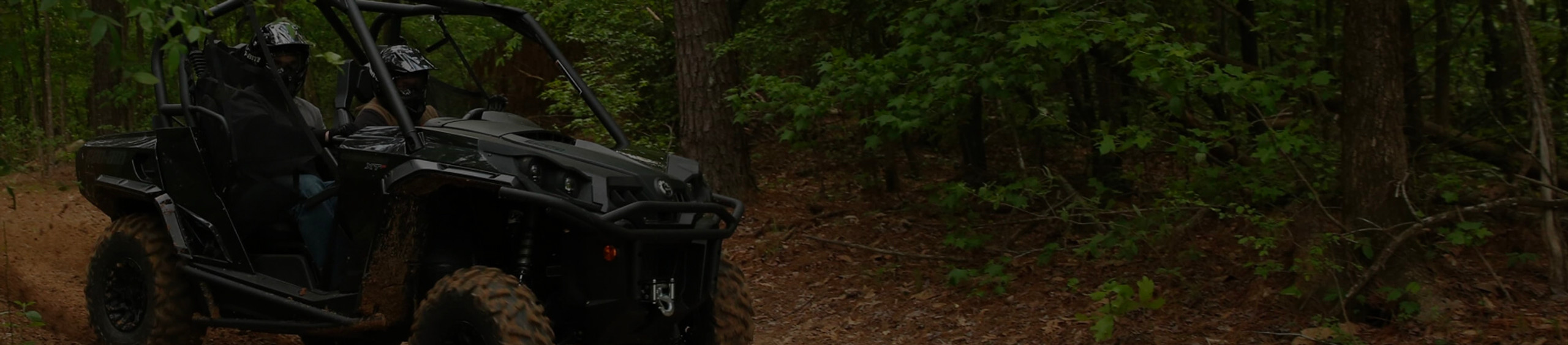
Sixty miles an hour of cold air and a horsefly is a bad combination. So is the rooster tail off the machine ahead of you on a dusty two-track, or the branch that comes through where the glass should be. A windshield is the first thing most owners add and the one accessory that changes every single ride, because it is the difference between arriving at the far end of the property able to see and able to talk. We carry 2,723 windshield products across every make we cover — Polaris, Can-Am, Honda, Kawasaki, Yamaha, CFMoto, Arctic Cat, John Deere and Kubota — in hard-coated polycarbonate, laminated DOT glass, vinyl, mesh and polyester fabric, and in every style from a fixed full front to a vented rear panel.
The thing most first-time buyers do not realize is that a third of this category faces backward. Nine hundred and twenty-two of these products are rear windshields, and on a lot of machines the rear panel does more for your comfort than the front one, because a UTV at speed pulls its own dust cloud forward into the cab through the open back. Windshields are also cut to your exact cage, so year, model and cab configuration all matter, and a two-seat panel will not fit a crew cage. Use the vehicle selector at the top of this page to narrow all 2,723 products to your machine, or call (414) 219-0509, text 920-644-5280, or hit the live chat and a real UTV person will match the windshield to your cage before you spend a dollar.
Nearly everyone shopping this category is thinking about the front. Then they buy one, and discover that closing the front without closing the back turns the cab into a wind tunnel that pulls dust and exhaust forward from behind them. The low pressure a moving machine creates behind the cab is what does it, and a front windshield alone can make it worse rather than better.
Front windshields stop the wind, the rain, the rocks and the branches. They are what you buy first and they are 1,792 of the products here.
Rear windshields, cab backs and dust stoppers close the space behind the seats. They are 935 products, and on a dusty trail or a gravel road they are the piece that actually stops the dust from swirling in. They also matter more than people expect in winter, because a sealed rear is what makes a heater worth running. If you ride in dust or plow in cold, buy both, and if your budget only covers one and you already have a roof, the rear is often the better first purchase.
| Style | Count | Best for | The trade |
|---|---|---|---|
| Full windshield | 1,077 | Maximum protection. Weather, cold, debris, work use, anything with a heater | Traps heat in summer, and a fixed full panel gives you no way out of that |
| Half windshield | 322 | Deflecting rocks and mud off your chest while keeping air moving over the top | Does nothing for rain or cold, and turbulence over the top edge can be worse than no shield at all on some cages |
| Folding or flip | 425 | Riders who want both. Closed in the morning, folded down when it warms up | Hinges and latches are more parts to rattle, and the folded panel sits in your sightline on some machines |
| Rear windshield | 922 | Stopping the dust and exhaust that come forward from behind | Reduces rear visibility on solid panels, though vented and mesh versions preserve it |
| Vented | across styles | The honest answer for most riders — full coverage with airflow control | Vents are a small clarity compromise where they sit |
On vents specifically: lower vents push air into the cab at your legs, upper vents exhaust the hot air that collects at the roof, and a dual system gives you real control. If you are choosing between a fixed full windshield and a vented one and you ride anywhere that sees an August, buy the vented one. The cost difference is small and the fixed panel is the single most common windshield regret we hear about.
Tip-out and electric tilt designs sit at the top of this ladder. A tip-out hinges the whole panel out at the bottom to scoop air in without folding it down. Electric tilt does the same from a dash switch. Both cost real money, and both are what serious work machines end up with.
Polycarbonate is 1,800 of the products here, and it is the default for good reason. It is far more impact-resistant than glass — a rock that would star a glass panel bounces off poly — and it weighs substantially less, which matters on a cage that was not designed to carry a windshield. The catch is scratching. Bare polycarbonate scratches from dust, wipers and bad cleaning. Hard-coated polycarbonate solves most of that, and it is worth the upcharge every time. If a listing does not say hard-coated, assume it is not.
Thickness runs from 3/16-inch (0.188") to 1/4-inch (0.250") in most UTV applications. Quarter-inch is stronger and stiffer and rattles less. Three-sixteenths is lighter and cheaper and is plenty for a trail machine. There is a real difference in how the two feel at speed, and the thicker panel is noticeably quieter.
Glass is 518 products and it wins on exactly one thing, which happens to be the thing you look through all day: optical clarity. Glass does not haze, does not scratch from a wiper, and stays clear for the life of the machine. Laminated safety glass is also what makes a DOT-approved windshield possible, which matters if you are building toward a street legal machine, since many states require DOT glass for road registration. The trades are weight and impact resistance — glass is heavier, and a hard enough hit cracks it where poly would flex.
The practical rule: glass if the machine works roads and fields and you want a wiper, polycarbonate if it works trails and rocks. Glass with a wiper is the setup for anyone who genuinely drives in rain.
Vinyl, mesh and polyester fabric cover the rest — 464 products between them, mostly rear panels, dust screens and soft cab backs. Mesh rear screens stop dust while keeping full rear visibility, which is the reason to choose one over a solid panel.
Hard coat, on both sides. A single-sided hard coat protects the outside and leaves the interior face to scratch from gloves, gear and cleaning. Double-sided is the standard to look for on any panel you plan to keep.
Uniform thickness. This is the manufacturing tell that separates real windshields from cheap ones. Any variation in panel thickness bends light unevenly, and the result is distortion that shows up worst at exactly the wrong moment — low sun, dusk, oncoming headlights. A good manufacturer holds thickness across the whole panel.
Clamps and the cage. Most windshields mount to your cage with clamps sized to the tube diameter. A poorly fitted clamp is where every rattle and every leak starts. Check whether the listing includes clamps for your cage or expects you to reuse existing hardware.
Seals. A rubber seal along the hood line is what stops the whistle at speed and the water that otherwise runs down the inside. It is the cheapest thing to leave out and the first thing you notice.
Wiper compatibility. If you want a wiper, buy the windshield with that in mind. Glass panels take wipers cleanly. Polycarbonate can, but a wiper on uncoated poly will scratch an arc into your sightline within a season. Some panels ship wiper-ready with a pre-cut mount.
Windshields have the flattest price distribution of anything we sell, which means there is a genuine option at almost every budget rather than a cheap tier and an expensive one.
Entry, $130 to $200. Where a lot of riders land and get everything they need. The Extreme Metal Products Sportsman ACE full hard-coated windshield is $144.99, SuperATV's UForce 800/500 scratch-resistant half windshield is $149.95, and UTVZILLA's Wildcat XX full polycarbonate with quick straps is $157.00. Rear panels start here too — Greene Mountain's Teryx Rear Windjammer is $179.99 and SuperATV's Maverick rear windshield is $184.95. Nearly 500 products sit under $200.
The sweet spot, $200 to $450. Where the catalog is deepest, with over 1,400 products. Spike's rear vented panels run $185 to $253, Extreme Metal Products' Mule 4000/4010 folding windshield with double-sided scratch resistance is $339.95 to $364.95, SuperATV's CFMoto UForce 600 flip windshield is $304.95 to $399.95, and UTVZILLA's Commander and Maverick Trail front glass is $397.00. This tier is where hard-coated poly, folding designs and entry glass live.
Premium, $450 and up. Laminated DOT glass and powered designs. Extreme Metal Products' Wolverine glass windshield is $497.99, their DOT-approved Mule 4000/4010 laminated glass is $579.95, their Pioneer 700 laminated glass with wiper is $485.95, Rough Country's electric tilt glass for the Ranger XP 900/1000 is $749.95, SuperATV's RZR Pro R MaxDrive power flip runs $759.95 to $799.95, and Fortress's Mule Pro tip-out tops the category at $1,449.95. Seven hundred and seventy-one products sit above $450.
Every order is covered by our 90-day return policy and our best price guarantee. The most common manufacturer warranty in this category runs 3 to 6 months, but Side by Side Source offers extended 1- and 2-year warranties on all products if that is something you are interested in — you can add the extended warranty right at checkout. On the powered and glass systems, Affirm at checkout lets you spread it.
Behind those three, SuperATV carries the deepest windshield catalog we stock at 602 products, UTVZILLA builds most of the front glass in our best-seller list, and Kemimoto, Tusk, Spike Powersports, Dot Weld Offroad and Dirt Warrior Accessories fill in across every make. Browse them all on the UTV brands page.
Not seeing your machine? These five are the volume sellers, not the catalog. Polaris Ranger, RZR and General, Can-Am Defender, Commander and Maverick, Honda Pioneer and Talon, CFMoto UForce and ZForce, Kubota Sidekick and RTV, and Arctic Cat Prowler and Wildcat all have dedicated front and rear windshields — filter by your year, make and model and the page narrows to what fits your cage.
A windshield you cannot see through in the rain is a windshield you fold down in the rain. If the machine works in weather, a windshield wiper kit is the accessory that finishes the job — hand-operated units for occasional use, electric kits for machines that work through storms. Glass panels take a wiper cleanly. On polycarbonate, only run a wiper on a hard-coated panel, or you will scratch an arc into your sightline in one season.
The rest of the short list: clamps sized to your cage tube, replacement seals, and polycarbonate-safe cleaner. On that last one, never use automotive glass cleaner on poly — the ammonia in it clouds the surface permanently. Plain water and mild soap, or a dedicated polycarbonate cleaner, with a clean microfiber and a wet surface every time.
A windshield is one of four panels. Closing all four is what turns a side by side into something you can work out of in February.
Front and rear windshields close the ends. Doors close the sides and a roof closes the top. Once those four are sealed, a UTV heater actually works — in an open cab it is warming the outdoors, which is the most common ordering mistake we see. If you would rather buy the whole thing as one engineered system, a cab enclosure does exactly that, and many of them are built specifically to seal against a hard windshield you already own.
Two more worth knowing. If you are heading toward a road-legal machine, DOT-approved laminated glass is usually a requirement, and our street legal category covers the rest of what that takes. And if you plow, get the windshield and the wiper before the first storm, not after.
Do I need a rear windshield if I already have a front one? Often, yes, and it surprises people. A moving UTV creates low pressure behind the cab that pulls dust and exhaust forward through the open back. Closing the front without closing the rear can make the swirl worse rather than better. If you ride dusty trails, gravel roads or behind other machines, a rear panel or dust stopper does more for cab comfort than most front upgrades. Mesh rear screens are the compromise if you want the dust stopped without losing rear visibility.
Polycarbonate or glass? Polycarbonate for trails and rocks, glass for roads and fields. Poly takes impacts that would crack glass and weighs less, but it scratches unless it is hard-coated — and if it is not hard-coated on both sides, the inside face will haze. Glass stays optically perfect for the life of the machine, takes a wiper without scratching, and is what DOT approval requires for a street legal build. It is heavier and it will crack where poly flexes.
Will a full windshield make the cab too hot? A fixed one will, in summer, and it is the most common windshield regret we hear. The fixes are all built into the product: vented panels, folding or flip designs, tip-out systems, or a half windshield for the warm months. If you are choosing between a fixed full panel and a vented one and you ride anywhere with real summer heat, buy the vented one.
Can I clean a polycarbonate windshield with regular glass cleaner? No. Ammonia-based automotive glass cleaner clouds polycarbonate permanently, and the damage cannot be polished out. Wet the panel first so grit floats instead of dragging, then use plain water with mild soap or a dedicated polycarbonate cleaner, and a clean microfiber cloth. Glass panels can take automotive cleaner without a problem.
How do windshields mount, and will it fit my cage? Most mount with clamps sized to your cage tube diameter, and most bolt on in under an hour with hand tools. Fit is cage-specific, not just model-specific — a two-seat panel will not fit a crew cage, and aftermarket cages change the geometry entirely. Check the listing for whether clamps are included, and if you are running an aftermarket cage, text us before ordering.
Are aftermarket windshields as good as OEM? OEM sells one panel, in one material, in one configuration. This page carries 2,723 products across dozens of brands in hard-coated polycarbonate, laminated DOT glass, vinyl, mesh and fabric, from $130 half shields to $1,450 tip-out systems — including vented, folding, electric-tilt and rear options most dealers do not stock at all. Extreme Metal Products' laminated glass is DOT-approved, which is a standard rather than a marketing claim. The argument here is not that aftermarket is cheaper. It is that the configuration you actually want probably only exists in the aftermarket.
Written and reviewed by the Side By Side Source fitment team — riders and product specialists who match windshields to cages every day. See what UTV owners say about us on our customer reviews page. Spot an error, or have a suggestion that would make this page more helpful? Email marketing@gearup2go.com — we read every note.
Last updated: August 2026